Screen strain isn't caused by one thing. It's caused by three things happening at the same time — and unless all three are addressed, the burning doesn't stop.
Screens flood your eyes with blue and green light (400–520nm), overstimulating your retina and suppressing melatonin. The "wired but tired" feeling starts here.
Bright spots and reflections force your iris to constantly contract and expand. That's the pressure and squinting feeling behind your eyes — the part clear lenses don't touch.
When you stare at a screen, your blink rate drops by up to 60%. Less blinking means less moisture. That's where the burning comes from — and eye drops only mask it for minutes.
Other glasses filter colour. Virex reduces strain. There's a difference — and you'll feel it the second you put them on.
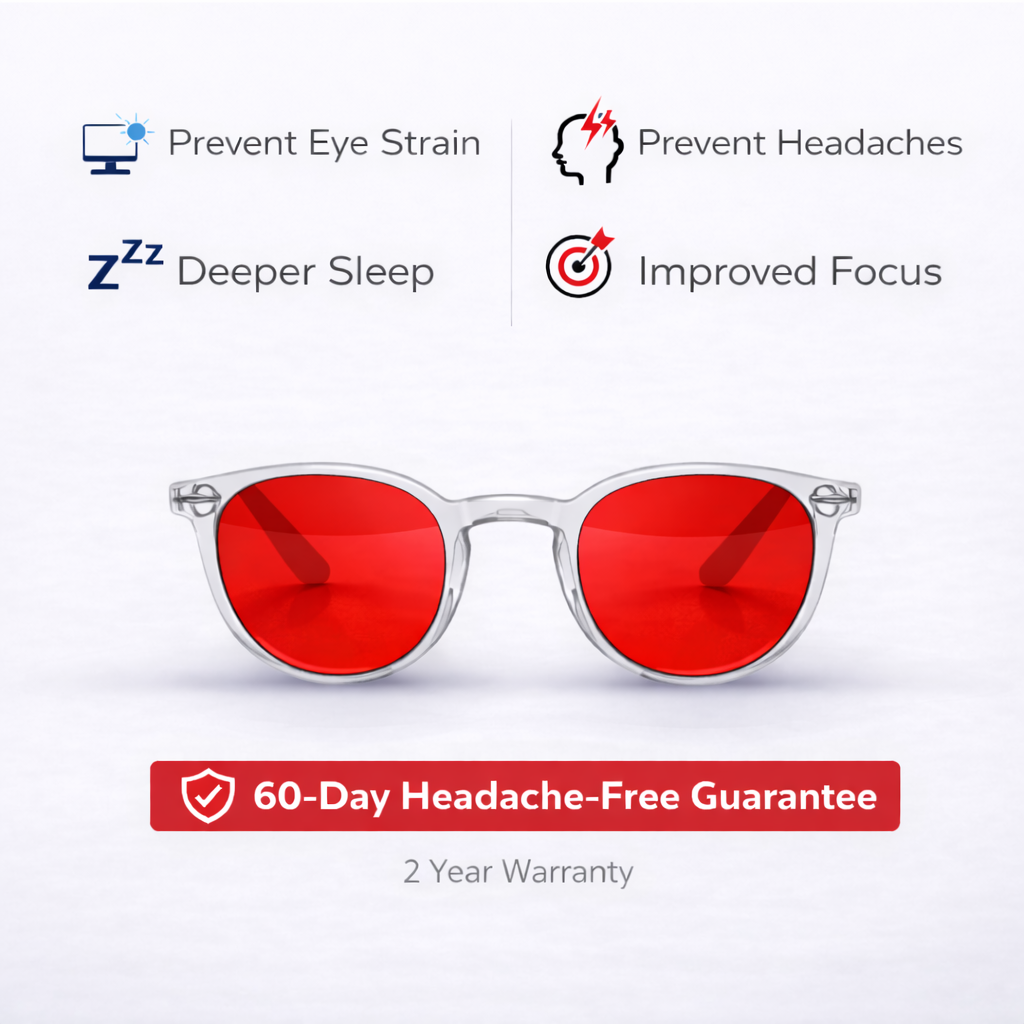
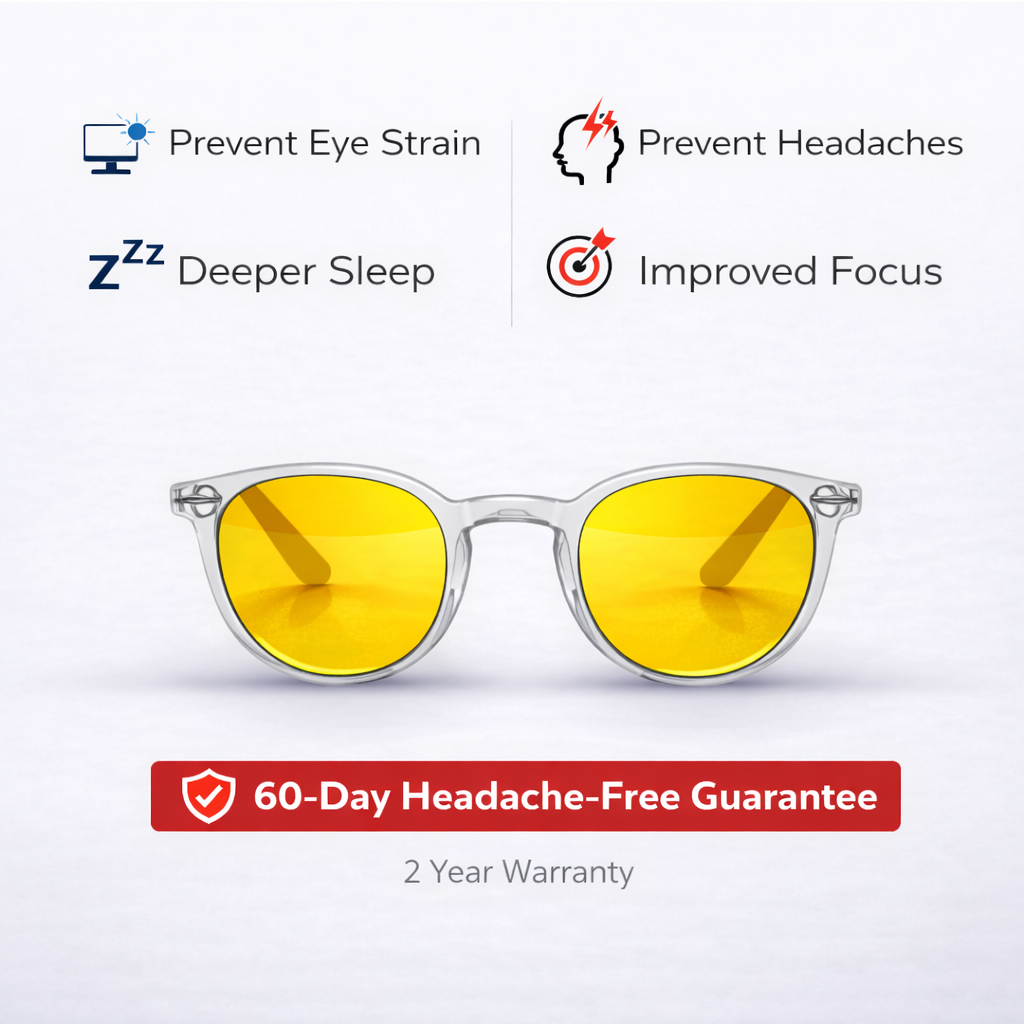
Three tints. Three use cases. Matched to when and how you use screens.
Night · Max filter
"Screen goes warm and soft. Eyes relax. Sleep comes easier."
Day · Strong filter
"Reduced glare, less afternoon headache, calmer focus."
Day · Light filter
"Less strain without colour distortion. Screen looks natural but softer."
Most only cover one layer of strain. Here's how they compare.
| Clear lens glasses | Red lens competitors | Virex | |
|---|---|---|---|
| Wavelength filtering | 5–20% | 99% | 99% |
| Glare buffering | ✗ | ✗ | ✓ |
| Dryness reduction | ✗ | ✗ | ✓ |
| Day + night lens options | ✗ | 2 options | 3 options |
| Strain layers covered | 1 of 3 | 1 of 3 | 3 of 3 |

Yes. Virex lenses are engineered to block up to 99% of harmful blue light, which is the primary cause of screen-induced eye strain, headaches, and sleep disruption.
Many customers report fewer headaches and reduced migraine intensity, especially those triggered by long screen exposure. By filtering harsh blue light, Virex helps reduce eye strain and neurological overstimulation that can lead to headaches
Absolutely.
No prescription is needed. Virex glasses are non-prescription and designed to be worn by anyone who spends time on screens. They can also be worn over contact lenses.
That’s why we offer a 60-Day Headache-Free Guarantee.
Try Virex risk-free—if you’re not satisfied, you can return them within 60 days for a refund.